

Desiccants as Components
Ensuring Precise Design and Process Stability
When a desiccant is part of an application and is used as a system component for moisture control, it must meet specific requirements. Desiccants are used as components in industries such as automotive, electronics, defense, aerospace, laser optics, utilities, and smart metering.
While a desiccant used as packaging material has no connection to the product itself or its manufacturing process and merely serves as an addition inside the packaging, a desiccant used as a component becomes part of the overall system. It may be integrated into an electronic control unit, an automotive air-conditioning system, or a camera optical assembly. This implies a much longer service life within the application compared to packaging desiccants.
There are generally two scenarios. In some systems, the desiccant must adsorb the enclosed moisture once and retain it permanently. Molecular sieve is frequently used for this purpose because it does not begin to release moisture until temperatures of approximately 280°C are reached. In other applications, the desiccant remains in the system for an extended period but must be replaced during scheduled maintenance cycles once it becomes saturated.
Higher Quality Requirements
Using desiccants as an integrated component demands exceptional stability and superior quality compared to standard packaging solutions. The material must ensure an extended service life and withstand mechanical stress such as vibrations in automotive applications. A key indicator of high desiccant quality is a low residual moisture load upon delivery. While a residual moisture load of 3% is common, TROPACK uses desiccants with a maximum residual moisture content of 1.5% for component applications.
Demonstrating Process Capability
To guarantee stable, long-term operation, the entire production process of the desiccant bag must achieve absolute process reliability. Any deviation from the engineered desiccant specifications poses a direct risk of system failure. Humidity within electronic assemblies accelerates corrosion, causes short circuits, disrupts wireless signals, and triggers lens fogging in optical systems. The resulting consequential costs of such failures can far exceed the initial investment in a high-grade desiccant. Therefore, both the design of the desiccant component and manufacturing process stability are critical.
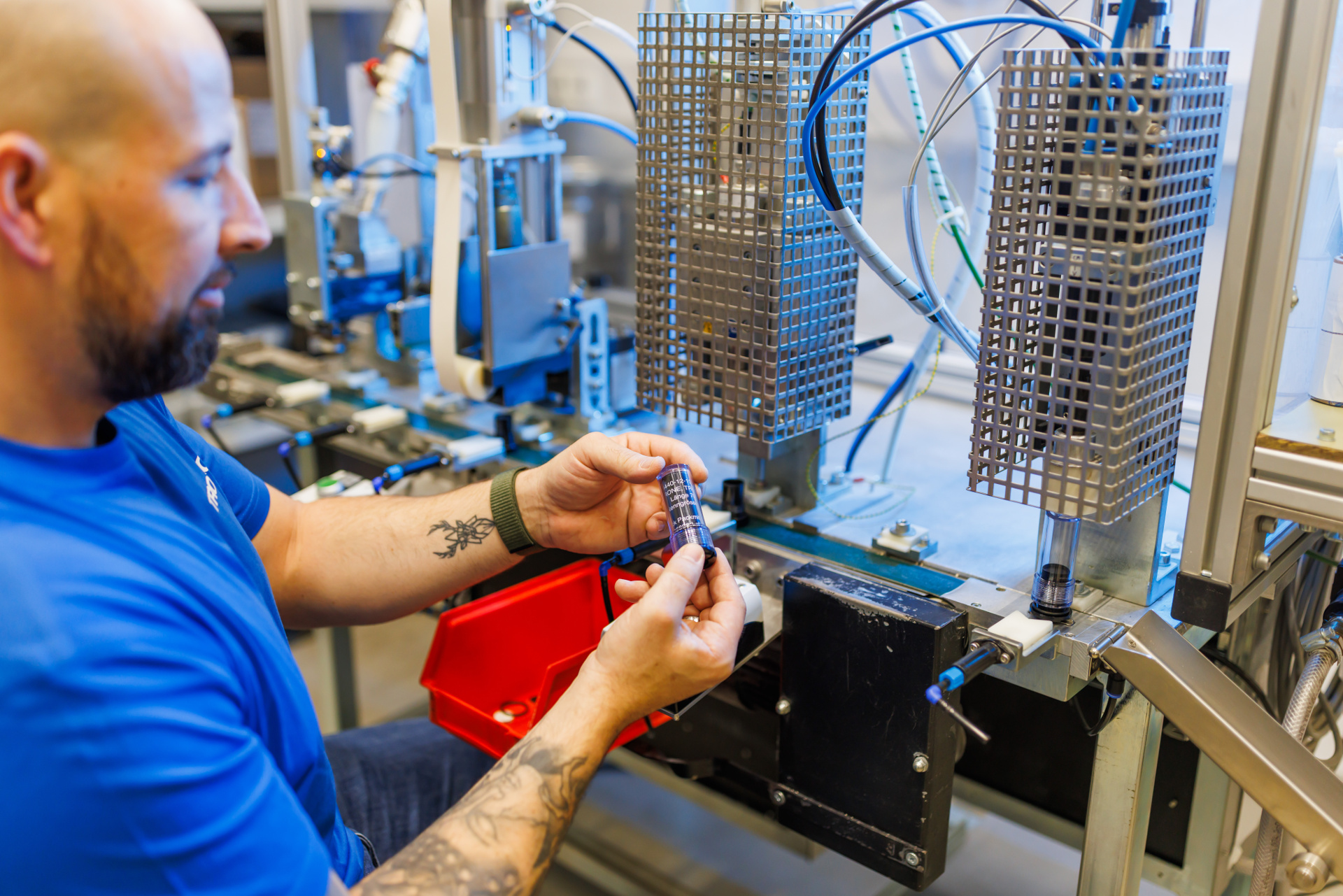
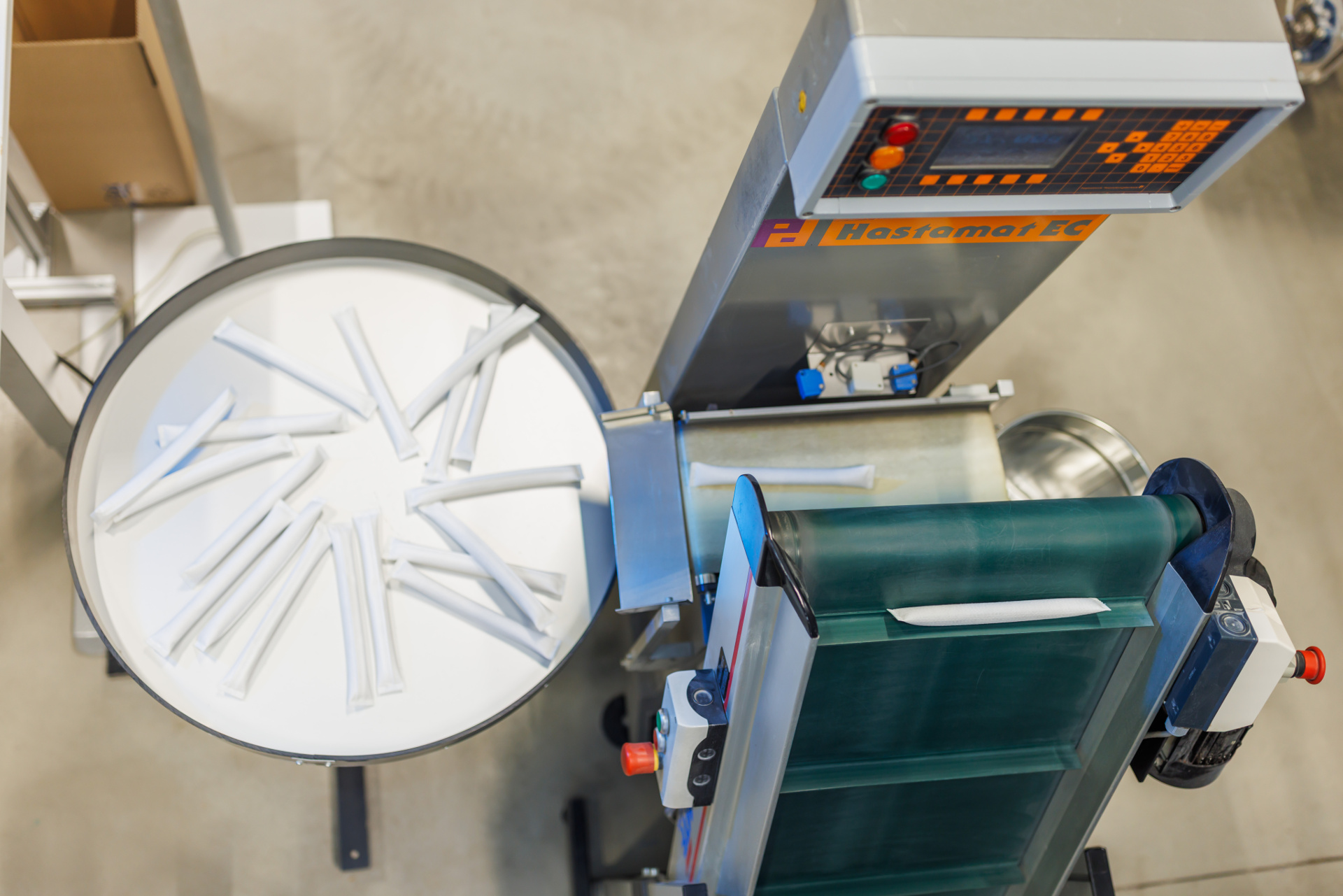
In the component sector, customers calculate the precise desiccant quantities required based on numerous variables to ensure performance over defined periods. As a manufacturer, this demands highly repeatable filling of exact quantities — verified by comprehensive machine capability studies and process capability studies. In addition, we apply a significantly higher number of inspection points during incoming goods control for component-grade desiccants compared to standard packaging desiccants. Using calibrated testing equipment, we verify the adsorption performance of the desiccant bags under diverse climate conditions. While standard packaging only requires a test climate of 23°C and 40% relative humidity according to DIN 55473, the customer-specific requirements for system components are vastly more demanding.
On-Site Customer Testing at TROPACK
To identify the most suitable desiccant solution for each application, we invite customers to collaborate and test directly at our manufacturing facility. Customers bring their specific housings or components, and together we utilize our advanced machinery to identify or custom-develop the ideal solution. This approach is far more efficient than multiple rounds of shipping samples back and forth. Drawing on our extensive experience, we guide companies toward the optimal component — from desiccant bags to cartridges, and from silica gel to molecular sieves.
When delivering desiccants as a functional system component, comprehensive product liability insurance is essential to mitigate potential damage risks. Demonstrating such coverage is also an important requirement during many customers’ onboarding processes.
Whether packaging or integrated component: For every inquiry, we deliver expert consultation on proper application and handling to ensure the perfect desiccant solution for your individual specifications.
TROPACK – you can count on us
TROPACK products comply with the highest quality standards according to DIN 55473 (12/2015). Our desiccants meet the relevant requirements established by the European Union (e.g. EC 1935/2004) and the US Food & Drug Administration FDA (e.g. 21 CFR part 175/part 177).
TROPACK quality standards are regularly verified in the form of DIN 55473 and ISO 9001 certifications.That’s something industry, the retail market and consumers alike can count on. TROPACK desiccants are food-safe, contaminant-free, odourless and renewable. (We expressly refrain from using dimethyl fumarate (DMF)!)